Nov. 10, 2026
Disposable menstrual pants are single-use underwear made from a soft nonwoven topsheet, an absorbent cellulose or fluff-pulp core with superabsorbent polymer, and a leak-resistant backsheet. They may also contain elastic fibers, leg cuffs, hot-melt adhesives, and packaging films. Exact materials vary by manufacturer, absorbency level, fit design, and intended use.
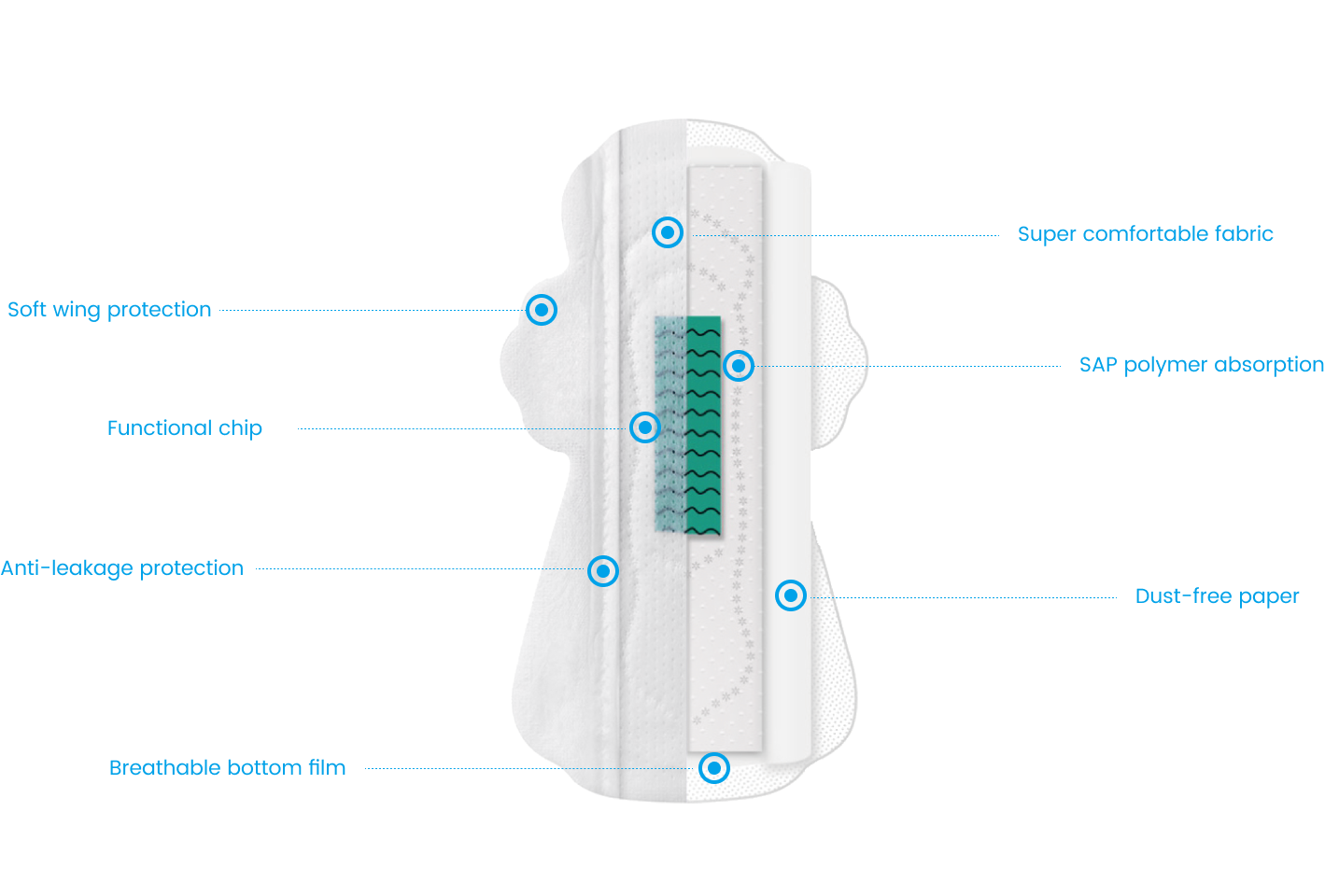
When I examine what are disposable menstrual pants made of, I look at the product as a layered absorbent system rather than as a single fabric. Each layer has a separate function: moving fluid away from the skin, storing liquid, reducing leakage, maintaining fit, or protecting clothing and bedding.
!
Disposable menstrual pants are constructed similarly to other absorbent hygiene products, but their shape is closer to underwear. The product usually combines a skin-contact layer, an absorbent center, a leak-resistant outer layer, elasticized edges, and adhesive materials. The design must balance absorbency, flexibility, breathability, fit, and production cost.
The following table shows the principal materials commonly used in disposable period pants and the role each material performs.
| Product layer | Common material | Main function | Common alternatives |
|---|---|---|---|
| Topsheet | Hydrophilic nonwoven fabric | Transfers menstrual fluid away from the skin | Cotton-like nonwoven, perforated film |
| Acquisition layer | Airlaid paper or soft nonwoven | Spreads fluid across the absorbent core | Tissue, 3D nonwoven |
| Absorbent core | Cellulose fluff pulp | Stores and distributes liquid | Wood pulp, bamboo pulp blends |
| Superabsorbent layer | Superabsorbent polymer | Converts liquid into gel and increases retention | Cross-linked sodium polyacrylate |
| Leakproof backsheet | Polyethylene film or breathable laminated film | Prevents fluid from reaching clothing | Breathable microporous film |
| Leg cuffs | Elastic strands and nonwoven fabric | Reduce side leakage and improve fit | Elastic film, spandex-like strands |
| Waistband | Elastic fibers, nonwoven, adhesive | Holds the garment in position | Elastic webbing or stretch film |
| Construction adhesive | Hot-melt adhesive | Bonds layers and components | Pressure-sensitive adhesive |
| Packaging | Polyethylene, paper, or laminated film | Protects the product during storage | Recyclable paper-based packaging |
The skin-contact topsheet is commonly made from hydrophilic nonwoven fabric. “Hydrophilic” means the surface is treated or engineered to allow liquid to pass through rather than remain on top. The material may be polypropylene, polyethylene, polyester, rayon, or a blend, depending on the manufacturer’s softness, strength, and fluid-transfer requirements.
Beneath the topsheet, some products include an acquisition and distribution layer. This layer is usually a low-density nonwoven or airlaid material that helps spread fluid across a larger area. By distributing menstrual fluid before it reaches the central absorbent core, the product can reduce localized saturation and improve the use of the available core area.
The absorbent core materials for disposable period pants usually include cellulose fluff pulp and superabsorbent polymer. Fluff pulp provides initial fluid uptake and helps distribute liquid through the core, while superabsorbent polymer absorbs and retains liquid in gel form. The ratio between these materials affects capacity, thickness, flexibility, and the product’s resistance to rewet.
Cellulose or fluff pulp is commonly derived from processed wood pulp. It forms a porous structure that can absorb liquid rapidly and spread it through the core. Some product designs may use bamboo pulp or other cellulose sources, but the specific origin and processing method should be confirmed through the manufacturer’s technical documentation.
Superabsorbent polymer, often based on cross-linked sodium polyacrylate, can hold many times its own weight in liquid. It is usually supplied as small particles or powder and placed within the absorbent core. When menstrual fluid reaches the particles, they swell and form a gel, helping reduce liquid movement under pressure.
The core may also contain tissue paper, airlaid paper, or a lightweight nonwoven wrap. These materials help keep the pulp and polymer positioned inside the garment during movement. A well-designed core must remain evenly distributed because concentrated material in one area can create stiffness, while insufficient material may cause leakage during sitting, sleeping, or physical activity.
Core weight is one of the manufacturing variables that affects absorbency, but it is not the only one. A heavier core may hold more liquid, yet excessive material can make the garment thicker and less flexible. Manufacturers also adjust polymer quantity, pulp density, core width, and the placement of absorbent material around the front, center, and rear zones.
For heavy periods or overnight use, a longer absorbent zone and greater rear coverage may be more important than simply increasing total core weight. Some designs add extra absorbent material toward the back to protect against leakage while lying down. Others use a wider crotch area or additional side barriers for users who experience lateral fluid movement.
Disposable menstrual pants work by combining fluid transfer, absorption, gel retention, and physical barriers. Menstrual fluid first passes through the topsheet, then moves into the acquisition layer and absorbent core. The cellulose pulp distributes the fluid, while superabsorbent polymer retains part of it as gel.
The backsheet provides the primary barrier between the absorbent core and clothing. It is often made from polyethylene film or a breathable laminated film. Standard polyethylene film offers strong fluid resistance, while breathable films contain microscopic pores that allow some water vapor and air movement while limiting liquid passage.
Breathability is influenced by more than the backsheet. Topsheet structure, core thickness, side-seam construction, waistband tension, and the amount of material covering the skin all affect heat and moisture management. A breathable design may feel more comfortable, but breathability does not mean that liquid can pass through the product.
Leg cuffs are usually made from nonwoven fabric combined with elastic strands or elastic film. They create raised or fitted barriers around the leg openings, limiting side leakage when the wearer changes position. The cuffs also help maintain contact between the garment and the body without requiring the entire product to be extremely tight.
Leak prevention depends on the relationship between the core and the garment shape. If the absorbent core is too narrow, fluid may reach the side seams before it is absorbed. If the leg elastic is too loose, gaps can form; if it is too tight, pressure marks and discomfort may result.
Disposable menstrual pants for sensitive skin should have a soft topsheet and should avoid unnecessary fragrance, dyes, and skin-irritating finishes. Sensitive-skin suitability cannot be determined from the word “cotton-like” alone because cotton-like usually describes texture rather than fiber content. I recommend checking the full material declaration, fragrance statement, and applicable safety or dermatological test information.
Common skin-contact materials include polypropylene nonwoven, polyethylene-based nonwoven, rayon, cotton-like fibers, or blends. These materials are not automatically safe or unsafe for every person; individual sensitivity varies. Friction, trapped moisture, heat, prolonged wear, and tight elastic can also contribute to discomfort even when the raw materials themselves are widely used in hygiene products.
For users with sensitive skin, I would compare the following details:
A user who develops persistent itching, burning, rash, swelling, or pain should stop using the product and seek medical advice. Product labeling can explain materials and intended use, but it cannot predict an individual medical reaction.
Many disposable menstrual pants contain plastic-based materials, although the exact amount varies. Polypropylene and polyethylene are commonly used in nonwoven layers, films, elastic components, and packaging. These polymers provide strength, liquid resistance, softness, or stretch at a relatively low product weight.
Plastic components are not limited to the leakproof backsheet. The topsheet may contain polypropylene fibers, the backsheet may use polyethylene film, and packaging may use plastic film to protect individual units. Some products also use elastic film or synthetic elastic strands.
A product may contain plant-based or cellulose materials and still include plastic components. Therefore, terms such as “natural,” “cotton-like,” or “plant-based” should not be treated as proof that the entire product is plastic-free. For a precise answer, buyers should request a bill of materials or a component-level material statement from the supplier.
Most disposable menstrual pants should be treated as household hygiene waste unless the packaging specifically provides different instructions. The combination of absorbent pulp, superabsorbent polymer, adhesives, elastic, and plastic films makes the finished garment difficult to process through ordinary paper or plastic recycling systems.
A product may include biodegradable materials without being fully biodegradable. Cellulose fluff pulp can break down under suitable conditions, but superabsorbent polymer, synthetic nonwoven fibers, elastic, and laminated films may remain for longer periods. Claims about biodegradability should identify which component is biodegradable, under what conditions, and within what time period.
Recycling is also limited by contamination. Used menstrual products generally cannot enter standard curbside recycling because they contain bodily fluids and mixed materials. I recommend wrapping the used product according to local household-waste rules and following the manufacturer’s disposal instructions.
From an environmental standpoint, disposable menstrual pants trade washing requirements for higher single-use material consumption. Reusable period underwear usually uses textile layers such as cotton, polyester, elastane, and waterproof laminates, but it requires repeated washing, drying, and long-term use to spread its production impact over many cycles.
The difference between disposable menstrual pants and reusable period underwear is mainly product architecture. Disposable pants are built as one-time absorbent products using pulp, superabsorbent polymer, nonwoven fabric, film, elastics, and adhesives. Reusable underwear is built as a washable textile garment using fabric panels, stitched seams, elastic, and a sewn-in absorbent or leakproof gusset.
| Factor | Disposable menstrual pants | Reusable period underwear |
|---|---|---|
| Main absorbent materials | Fluff pulp and superabsorbent polymer | Washable textile layers and absorbent fabric |
| Primary barrier | Polyethylene or breathable film | Laminated waterproof textile |
| Use cycle | Single use | Repeated use |
| Washing required | No | Yes |
| Disposal | Household waste in most cases | No routine disposal after each use |
| Convenience | Useful for travel, postpartum care, and overnight changes | Useful for long-term routine use |
| Fit adjustment | Determined by size and elastic design | Determined by size, cut, and fabric stretch |
| Environmental trade-off | More single-use waste | Requires water, detergent, and drying energy |
I would choose disposable pants when immediate convenience, clinical hygiene, travel, postpartum bleeding management, or overnight protection is the priority. I would consider reusable underwear when the user has reliable washing facilities and wants a garment designed for repeated cycles. Neither format is automatically suitable for every person or every flow level.
The manufacturing process begins with material preparation and specification control. Suppliers typically define topsheet type, core composition, polymer quantity, backsheet structure, elastic dimensions, garment size, and packaging format before production begins. In an OEM project, these decisions are usually connected to the intended market, absorbency target, private-label requirements, and regulatory documentation.
A typical production sequence includes:
Adhesive selection affects flexibility, bonding strength, odor, and production stability. Excess adhesive may make parts stiff, while insufficient adhesive can permit layer separation. Elastic tension also requires control because it influences waist comfort, leg-gap formation, and the ability of the product to remain correctly positioned.
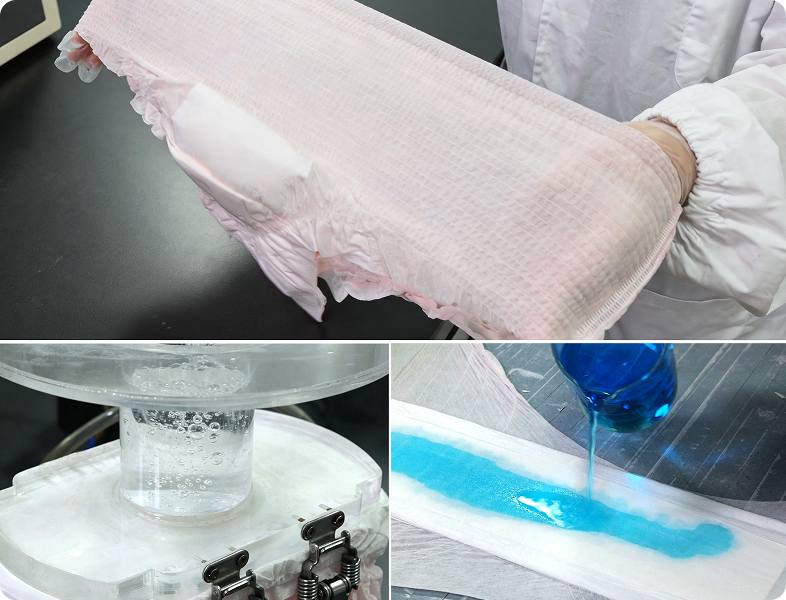
Bainuo identifies itself as a manufacturer of disposable sanitary products with R&D, production, sales, laboratory, packaging, and OEM/ODM capabilities. Its published manufacturing information describes menstrual-pants production lines, raw-material preparation, laboratory testing, automatic packaging, and final shipment as parts of its production workflow.
When I compare products, I do not judge them by absorbent-core weight alone. I first match the product architecture to the intended use, then review fit, materials, absorbency information, skin-contact features, and disposal instructions.
Use this checklist before purchasing or specifying a product:
For brands developing a new product, Menstrual Pants OEM discussions should address every layer separately. A supplier should be able to explain the proposed topsheet, core weight, superabsorbent polymer content, backsheet film, elastic structure, adhesive system, testing plan, and packaging. This level of detail makes it easier to compare quotations based on actual product architecture rather than price per package alone.
What Are Disposable Menstrual Pants Made Of? In most designs, they contain a soft nonwoven topsheet, an acquisition layer, a cellulose or fluff-pulp absorbent core, superabsorbent polymer, a polyethylene or breathable-film backsheet, elastic leg cuffs, a waistband, hot-melt adhesives, and protective packaging. Each material contributes to fluid transfer, retention, leak prevention, fit, breathability, or structural stability.
For sensitive skin, I would prioritize fragrance-free, latex-free, clearly labeled products with a soft topsheet and suitable moisture management. For heavy periods or overnight use, I would compare core coverage, rear protection, polymer content, leg-cuff construction, and declared absorbency rather than relying on product names. Finally, I would treat most used disposable menstrual pants as household hygiene waste unless the manufacturer and local waste authority provide specific recycling or composting instructions.
Latest News
Nov. 11, 2026
Nov. 10, 2026
Nov. 09, 2026
Talk to our experts today.
Tel: 0086 13302562673
Email: jennybainuo01@gmail.com
Add:No. 2 Building, No. 13 Tongsheng 1st Road, Nanshan Town, Sanshui District, Foshan City, Guangdong Province, 528100, China
NAVIGATION
NAVIGATION
CONTACT US
Tel: 0086 13302562673
Email: jennybainuo01@gmail.com
Add: No. 2 Building, No. 13 Tongsheng 1st Road, Nanshan Town, Sanshui District, Foshan, Guangdong, 528100,CHINA