Nov. 20, 2026
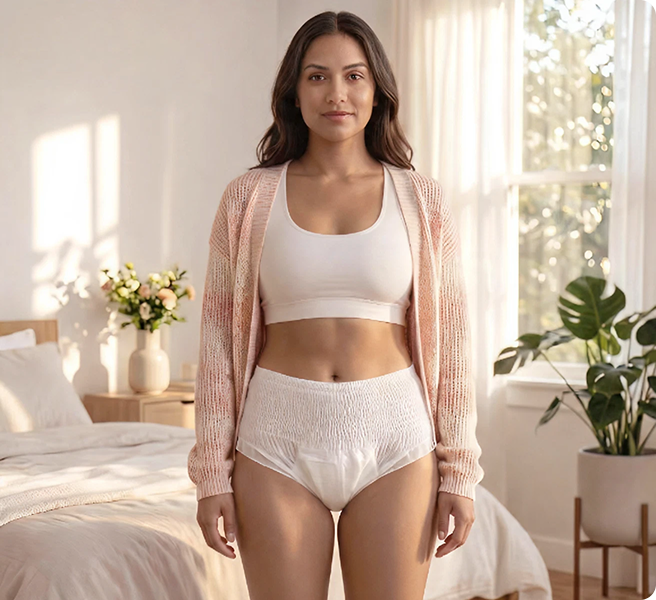
Plus size disposable period underwear can provide full-coverage protection without the shifting and side gaps that some users experience with pads. In this guide, I explain how to measure your body, read different size charts, compare absorbency and coverage, and troubleshoot fit problems such as rolling waistbands, tight leg openings, bunching, and overnight leaks. I also compare disposable, reusable, postpartum, and incontinence options so you can select protection based on your measurements and flow rather than the size printed on the package.
!
Plus size disposable period underwear is a single-use menstrual garment designed with an absorbent center, elastic waist, leg openings, and leak-resistant outer layers. Unlike a conventional pad, it wraps around the body and usually extends across the front, seat, and sides. This construction can reduce movement during sleep, work shifts, travel, or postpartum recovery.
The absorbent core may contain wood pulp, superabsorbent polymer, or a combination of both materials. The outer layer commonly uses a breathable nonwoven fabric or moisture-resistant film, while elastic sections help keep the garment close to the body. Disposable menstrual underwear is removed and discarded after use, so it does not require washing, drying, or storage between wears.
I recommend treating disposable period underwear as a complete protection system rather than simply a larger pad. A correct fit must hold the gusset against the body, keep the rear coverage in place, and allow the waistband and leg openings to stretch without creating pressure marks. Absorbency matters, but a poorly fitted garment can leak even when its absorbent core is suitable for your flow.
The most reliable Plus Size Period Underwear sizing method uses four measurements: natural waist, fullest hip, rise, and body length. Many packages show only a waist range, but waist size alone cannot predict whether the leg openings will gap or whether the gusset will reach far enough toward the front and back. I suggest comparing every available measurement before selecting a size.
Use a soft tape measure while wearing thin clothing or underwear. Keep the tape level with the floor, firm against the body, and loose enough to avoid compressing soft tissue.
When your waist and hip measurements fall into different size bands, use the larger size unless the manufacturer gives a body-shape recommendation. If you are between sizes, sizing up usually provides more waistband room and reduces pressure during overnight use. However, check whether the larger size has leg openings that are too loose, because gapping can create a direct path for leakage.
Size labels such as XL, 2XL, 3XL, and 4XL are not standardized across manufacturers. One company may use 2XL for a 100 cm waist, while another may assign the same label to a 115 cm waist. For this reason, the measurement range is more useful than the letter size.
| Measurement detail | Why it matters | What to do |
|---|---|---|
| Waist range | Controls waistband pressure and garment stability | Compare with your standing and seated waist |
| Hip range | Determines seat coverage and side stretch | Use the fullest hip measurement |
| Rise | Affects front and rear coverage | Choose a longer rise for overnight use |
| Leg opening | Controls side leakage and comfort | Avoid openings that cut into skin or gap away |
| Gusset length | Positions the absorbent core | Confirm front-to-back coverage for your flow |
| Weight range | Sometimes used as a secondary sizing guide | Do not use weight alone to select a size |
A chart that lists only weight should be treated as incomplete. Body proportions vary substantially at the same weight, so I would still request waist, hip, rise, and garment-length information before ordering a large quantity.
Disposable period underwear should remain close to the body while standing, sitting, walking, and lying down. The waistband should stay in place without rolling inward, and the leg openings should touch the skin without pinching. The absorbent gusset should sit under the vaginal opening and extend far enough toward the rear for your typical sleeping position.
If the waistband rolls, the garment may be too small, too short in the rise, or made with elastic that does not recover well after stretching. If the leg openings feel tight, a larger size may help, but check that the hip and rear coverage remain secure. If the underwear bunches between the legs, the gusset may be too narrow, the body length may be incorrect, or the garment may be oversized.
Disposable period underwear for heavy flow should be selected using absorbency information, core construction, and coverage design together. A product described as “overnight” may offer a longer rear panel, but that description does not automatically indicate a specific fluid capacity. Ask whether the manufacturer provides laboratory capacity data, testing conditions, or a recommended replacement interval.
For heavy periods, I look for a full-length absorbent core, extended rear coverage, side barriers, and a waist design that prevents the garment from shifting. A wood-pulp and SAP core can provide a different performance profile from wood pulp alone, but the actual result depends on core weight, distribution, compression, and the outer leak-resistant layer. Product claims should therefore be compared with construction details rather than wording alone.
For overnight use, choose a high-waisted design with a long gusset and broad seat coverage. Side sleeping can direct fluid toward one edge, so the leg openings and side barriers need to remain close to the body. If your flow is extremely heavy, you may need to change the garment more frequently or use an additional product during the heaviest hours.
Bainuo lists a plus size menstrual pants design with a 90–130 cm waist range, approximately 45–90 kg user weight range, high-waist construction, full buttock coverage, soft non-marking waistband, and double leak protection. Its listed absorbent core options include wood pulp, SAP, or wood pulp combined with SAP. These specifications make it more suitable for brands or buyers seeking an extended-size disposable format, although the manufacturer should confirm the final absorbency capacity and finished garment measurements for each project.
Retail availability changes by region, and many disposable menstrual underwear products do not publish complete size measurements. The table below separates commonly available product categories from manufacturer-supplied options and uses approximate purchasing ranges rather than fixed prices.
| Option | Typical size information | Absorbency and coverage | Pack or price guidance | Intended use |
|---|---|---|---|---|
| Bainuo plus size menstrual pants | Listed waist range: 90–130 cm; approximately 45–90 kg | Wood pulp, SAP, or combined core; high waist; full seat; double leak protection | OEM/ODM quote; MOQ listed at 3,300,000 pieces per SKU | Private-label menstrual, maternity, and heavy-flow programs |
| Retail disposable period underwear | Often XL–4XL, but measurements vary by brand | Usually moderate to overnight claims; coverage varies | About $1–$4 per garment in small retail packs | Travel, work, overnight, and temporary use |
| Reusable plus size period underwear | Commonly extends beyond 3XL, depending on brand | Layered textile gusset; capacity varies by design | About $25–$45 per garment | Regular cycles and lower recurring waste |
| Postpartum disposable underwear | Often designed with flexible waist panels | May include absorbent layers but is not always rated for menstrual flow | About $1–$3 per garment | Early postpartum bleeding and hospital packing |
| Adult incontinence underwear | Broad size ranges are common | Frequently rated by absorbency level and larger fluid volumes | About $1–$3 per garment | Menstrual and bladder leakage, depending on product design |
Bainuo’s listed product is a manufacturer option rather than a standard retail shelf item. The company states that it provides private-label packaging, size adjustment, testing documentation, and OEM/ODM production, with a listed 15-day lead time after order confirmation. Buyers should request a sample, finished measurement sheet, absorbency report, packaging specification, and shipping quotation before making a commercial decision.
Disposable period underwear is most practical when washing is difficult or when convenience has a higher priority than long-term cost. It can be useful for flights, camping, hospital stays, postpartum recovery, long shifts, or emergency storage at work. The trade-off is recurring purchase cost and higher material waste after each use.
Reusable period underwear generally costs more at the beginning but can be worn through many wash cycles when properly maintained. It requires access to water, detergent, drying space, and a rotation of several garments. For regular monthly use at home, reusable products may reduce the cost per wear, while disposable products may be more practical for travel or unpredictable situations.
Postpartum and incontinence garments are related but not identical categories. Postpartum underwear often prioritizes soft stretch, large pads, and easy disposal, while incontinence underwear may be designed around urine absorption and different fluid distribution. If you are combining menstruation with bladder leakage, compare the product’s intended absorbency, gusset length, odor-control claims, and skin-contact materials rather than assuming all absorbent underwear performs the same way.
Pads remain useful when you need frequent visual checks, adjustable placement, or a lower unit cost. They can also be easier to combine with other garments when disposable underwear does not reach your waist or hip measurements. However, pads may shift during sleep, curl at the edges, or leave gaps when the underwear does not provide enough surface area.
Disposable period underwear usually offers broader front, side, and rear coverage. It can reduce the need to reposition a pad, and the waistband may help keep the absorbent area aligned while walking or sleeping. Its disadvantages include less flexibility for mid-use changes, higher cost per garment, and the possibility that a poor fit will cause pressure, bunching, or leaks around the leg openings.
I would choose pads when measurement availability is limited or when I need to change protection frequently. I would choose disposable underwear when full coverage, reduced shifting, and quick disposal are more important than the lowest cost per change.
A rolling waistband usually indicates insufficient rise, excessive tension, or a waistband that is too narrow for the body shape. Try a larger size if the hip and leg openings remain compatible, or select a higher-waisted design with a wider elastic panel. Do not fold the waistband down, because doing so can reduce rear coverage and change the position of the absorbent core.
Tight leg openings can cause red marks, friction, or discomfort during sitting. Gapping creates a different problem because fluid can bypass the absorbent center before reaching the core. When the waist fits but the legs do not, look for a different cut or construction rather than automatically choosing a much larger size.
Bunching often occurs when the rise is too long, the gusset is too narrow, or the garment is too large. Pull the underwear fully into the leg creases before use and check that the gusset is centered. If it still folds after walking and sitting, the garment shape may not match your body proportions.
Overnight leaks can result from insufficient absorbency, rear coverage that is too short, side sleeping, or delayed changing. For heavy flow, use a longer high-waisted design and consider changing before the garment reaches saturation. If leaks continue despite a secure fit, the product’s absorbency rating may not match your actual flow volume.
Bainuo is a Guangdong-based sanitary product manufacturer established in 2006. Its product range includes sanitary pads and disposable menstrual pants, and its published manufacturing information describes raw-material preparation, absorbent-core forming, shaping, lamination, real-time detection, packaging, laboratory testing, warehousing, and shipment. This makes the company relevant to private-label buyers seeking an extended-size disposable menstrual product rather than only a consumer buying a single pack.
For a private-label project, I would ask Bainuo to confirm the final waist, hip, rise, leg-opening, gusset, and body-length measurements in writing. I would also request absorbency testing conditions, materials documentation, skin-contact safety information, packaging quantities, minimum order requirements, and delivery terms. The published plus-size product can be customized by size, pack quantity, packaging, top-sheet material, and optional functional features, but each change should be validated with a production sample.
Before buying plus size disposable period underwear, confirm the following:
Plus Size Disposable Period Underwear: A Fit Guide should begin with measurements, not marketing labels. Compare your waist and hip circumference, then assess rise, leg openings, gusset length, body length, absorbency, and coverage as one system. If you are between sizes, prioritize a stable fit with enough room for overnight movement, but do not accept leg gapping or a gusset that does not reach the necessary coverage areas. For regular home use, reusable underwear may reduce long-term cost, while disposable products can suit travel, postpartum care, work shifts, and emergency protection. If no disposable option reaches your measurements, choose a wider-coverage pad, a reusable extended-size garment, or an appropriately sized incontinence or postpartum alternative.
Latest News
Nov. 24, 2026
Nov. 23, 2026
Nov. 20, 2026
Talk to our experts today.
Tel: 0086 13302562673
Email: jennybainuo01@gmail.com
Add:No. 2 Building, No. 13 Tongsheng 1st Road, Nanshan Town, Sanshui District, Foshan City, Guangdong Province, 528100, China
NAVIGATION
NAVIGATION
CONTACT US
Tel: 0086 13302562673
Email: jennybainuo01@gmail.com
Add: No. 2 Building, No. 13 Tongsheng 1st Road, Nanshan Town, Sanshui District, Foshan, Guangdong, 528100,CHINA