Nov. 19, 2026
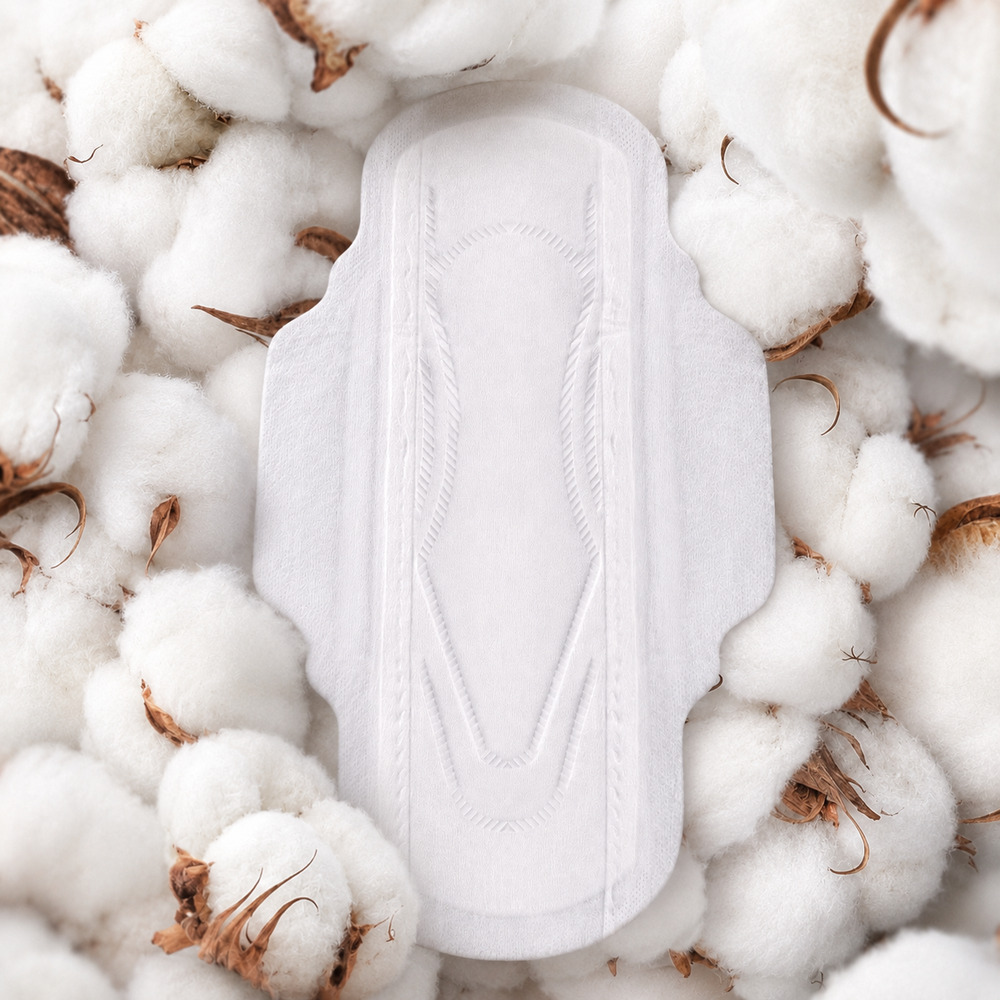
Organic vs Conventional Cotton in Sanitary Pads is mainly a comparison of fiber sourcing, processing, product construction, skin-contact materials, environmental effects, and price. Organic cotton may reduce exposure to certain agricultural chemicals and may be useful for shoppers seeking fragrance-free or chlorine-free sanitary pads, but it is not automatically safer, more absorbent, or more biodegradable. I compare the full pad structure rather than judging the product by its cotton label alone.
!
Bainuo is a sanitary product manufacturer established in 2006 in Foshan, Guangdong, China. Its product range includes Organic Cotton Sanitary Pads, biodegradable sanitary pads, bamboo fiber sanitary pads, menstrual pants, and private-label menstrual care products. The company describes an eight-stage OEM and ODM process covering product planning, raw material preparation, production, packaging, laboratory testing, and final shipment.
Organic cotton is grown under an organic agricultural standard that restricts or prohibits many synthetic pesticides, genetically modified seeds, and certain chemical inputs. Conventional cotton is produced through standard agricultural systems, which may use synthetic fertilizers, pesticides, irrigation, and other crop-management methods. The finished cotton fiber can then be cleaned, carded, bleached, bonded, or processed before it becomes part of a sanitary pad.
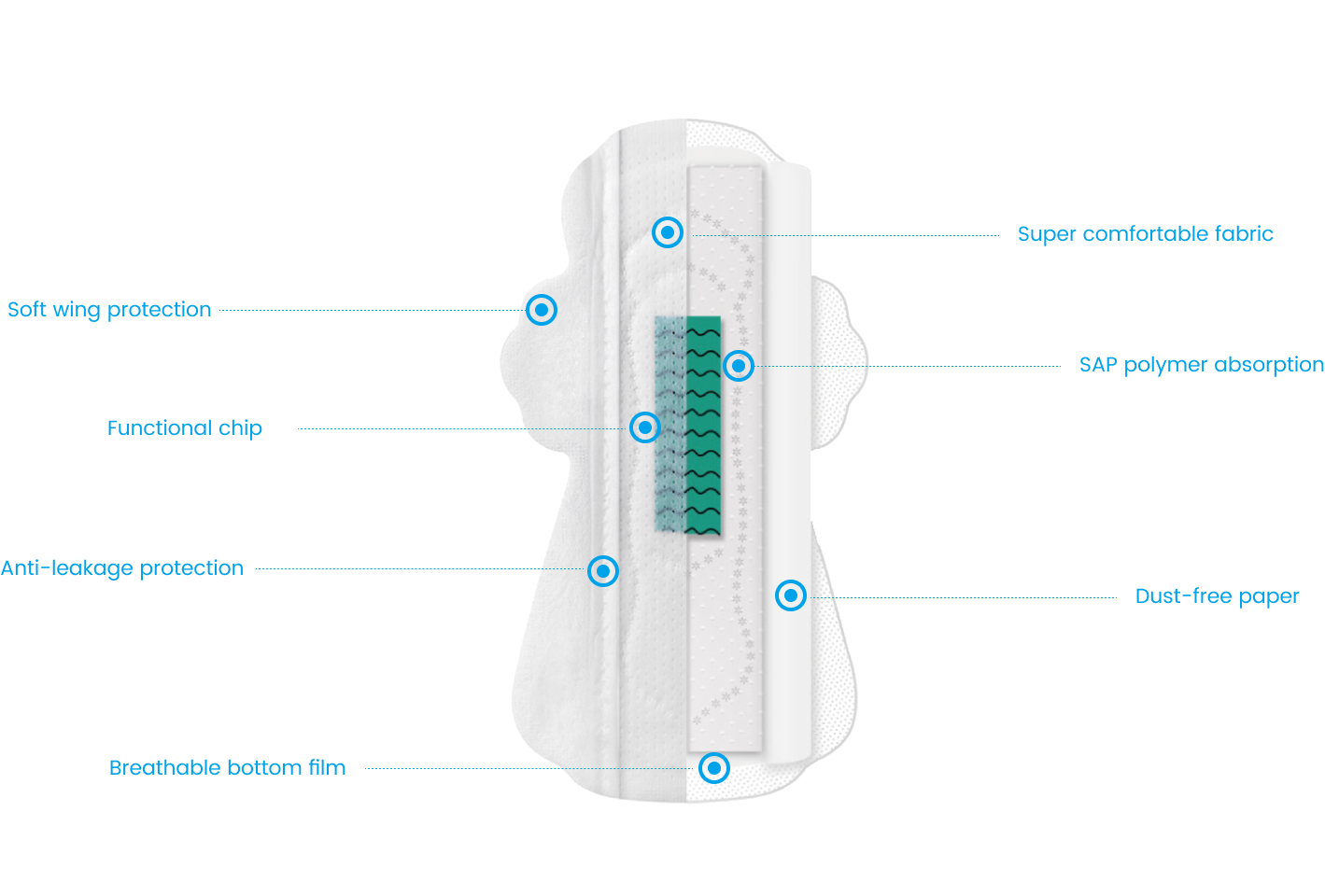
The most important distinction is that cotton is only one component of a menstrual pad. A typical disposable pad may contain a topsheet, acquisition layer, absorbent core, leakage-control layer, backsheet, adhesive, release paper, packaging film, and sometimes fragrance or surface treatments. Therefore, an organic cotton topsheet does not mean that every layer is organic, plastic-free, biodegradable, or free from all processing chemicals.
| Comparison factor | Organic cotton pad | Conventional cotton pad |
|---|---|---|
| Cotton source | Produced under an organic farming standard | Produced through conventional agriculture |
| Pesticide requirements | Restricted inputs under the relevant certification system | May involve approved synthetic pesticides |
| Skin-contact experience | Depends on softness, moisture control, dyes, fragrance, and finish | Depends on the same construction factors |
| Absorbency | Determined mainly by core materials and pad design | Determined mainly by core materials and pad design |
| Plastic content | May still include polyethylene or polypropylene layers | Commonly includes plastic layers and packaging |
| Certification | Should be verified by a recognized certification body | May carry textile, safety, or factory certifications |
| Price | Often higher because of certified material sourcing | Usually available at a lower unit price |
| Environmental profile | May reduce some agricultural impacts, but not all waste impacts | May have higher agricultural-input impacts, depending on sourcing |
The topsheet is the layer that touches the body. Organic cotton sanitary pads for sensitive skin often use cotton in this layer because the material can feel soft and familiar, but comfort depends on fiber fineness, bonding, surface texture, moisture transfer, and whether the fabric contains dyes or finishing agents.
A conventional cotton topsheet is not automatically rough or irritating. Some conventional pads use carefully processed cotton, nonwoven fabrics, or cotton blends designed to move fluid away from the skin. When comparing products, I look for fragrance-free and dye-free claims, ingredient transparency, and clear information about the actual skin-contact material.
The absorbent core holds menstrual fluid and controls how quickly the pad becomes saturated. It may include cellulose pulp, fluff pulp, superabsorbent polymer, cotton, bamboo fiber, or a combination of these materials. The cotton label alone cannot predict whether a pad will perform well during heavy flow.
For heavy periods, I would prioritize core capacity, length, width, raised barriers, back coverage, and secure adhesive placement. A conventional pad with a carefully engineered core may protect better than an organic cotton pad with a thinner construction. Buyers should also consider whether the product is designed for daytime use, nighttime use, exercise, or extended wear.
The backsheet usually helps prevent fluid from passing through to clothing. Many disposable pads use polyethylene or polypropylene films because these materials provide a reliable moisture barrier, although they also increase plastic content and reduce biodegradability.
Some products combine a breathable nonwoven layer with a plastic barrier. This can reduce the feeling of heat or dampness, but “breathable” does not mean plastic-free. I recommend checking whether the backsheet is described as biodegradable, compostable, or simply breathable, because these terms refer to different properties.
The adhesive keeps the pad attached to underwear and may also secure the wings. Poor adhesive placement can cause folding, shifting, or leakage even when the absorbent core performs well. Organic cotton does not determine the adhesive formula, so this layer needs separate evaluation.
Release paper and individual wrapping may also contain coatings or plastic films. For buyers focused on sustainable menstrual products, the wrapper, disposal bag, carton, and shipping materials can have a measurable effect on total waste. A pad marketed as organic may still use individually wrapped plastic packaging.
Organic pads may be a reasonable option for people who prefer cotton against the skin or want to avoid certain agricultural residues, but the organic label does not prove that a pad will prevent irritation. Skin reactions can result from fragrance, dyes, adhesives, preservatives, heat, moisture, friction, or prolonged contact. For this reason, I treat organic cotton as one screening factor rather than a complete skin-sensitivity solution.
For organic cotton sanitary pads for sensitive skin, I would check the following product details:
If irritation continues, changing brands may not be enough. I would also reduce wear time, choose a size appropriate for the flow level, and seek medical advice for persistent burning, swelling, sores, unusual discharge, or recurring rashes. Organic cotton may be more comfortable for some users, but individual tolerance remains more important than the marketing category.
Organic pads can absorb as well as conventional pads when they use a comparable absorbent core, fluid-distribution layer, and leakage-control design. The cotton source does not determine the total absorbency of the finished product. A pad with an organic cotton topsheet may still rely on cellulose pulp and superabsorbent polymer in the core.
I compare absorbency by examining practical design features rather than relying on the word “organic.” These include the product’s size, thickness, core material, raised channels, wing structure, back coverage, and stated use case. For heavy flow, overnight use, or postpartum bleeding, I would select a product with appropriate coverage and change it according to the level of saturation.
The environmental comparison between organic and conventional sanitary pads involves several stages. Organic farming may restrict certain synthetic agricultural inputs and can support different soil-management practices, but cotton production still requires land, water, harvesting, processing, and transportation. Conventional cotton may have a larger input burden in some farming systems, but the actual result depends on regional methods and verified production data.
The finished pad can create substantial environmental effects through plastic films, adhesives, individual wrappers, cartons, factory energy use, transportation, and disposal. A product with organic cotton may therefore reduce one part of the supply chain while retaining non-biodegradable layers elsewhere. I would not describe any disposable pad as fully sustainable unless the manufacturer provides specific evidence for each major component.
Certification is useful because it can clarify whether the claim refers to the cotton fiber, textile processing, factory conditions, or the entire finished product. Buyers should distinguish between certified organic cotton, organic-content claims, chlorine-free processing, biodegradable materials, and compostable packaging. These claims are not interchangeable, and each should be evaluated according to its stated scope.
| Your priority | What I would look for | More suitable direction |
|---|---|---|
| Sensitive skin | Fragrance-free, dye-free, soft topsheet, moisture control, clear ingredients | Organic or conventional, based on full construction |
| Heavy flow | Large core, high coverage, wings, raised barriers, overnight length | Whichever product offers stronger verified protection |
| Lowest price | Unit cost, pack size, replacement frequency, local availability | Usually conventional cotton or cotton-blend pads |
| Reduced agricultural chemical exposure | Verified organic cotton certification | Certified organic cotton pad |
| Lower plastic use | Plastic-free or reduced-plastic claims for each layer | Product with specific material disclosure |
| Biodegradability | Verified decomposition claim and defined disposal conditions | Pad with documented biodegradable components |
| Fragrance avoidance | No added fragrance or scent masking | Organic or conventional fragrance-free pad |
| Private-label development | Material options, testing, packaging, factory controls, customization | An experienced OEM/ODM manufacturer |
I begin with the ingredient and material list, not the front-of-pack claims. I check whether “organic cotton” refers to the topsheet, the absorbent core, or the entire product, and I look for a certification name or standard rather than a general natural-material statement. I also check whether the product is fragrance-free, dye-free, chlorine-free, and suitable for the intended flow level.
Next, I assess the physical construction. A thin pad may be comfortable for light flow but unsuitable for overnight use, while a larger pad may provide stronger coverage but feel warmer or less flexible. I also inspect the wings, adhesive strip, backsheet, individual wrapper, and disposal instructions because these parts affect daily use and environmental impact.
Finally, I compare the unit price with expected replacement frequency. A pack with a higher purchase price may not provide better value if the pad requires more frequent changes or does not prevent leakage. I prefer products that provide clear sizing, material information, certification details, and realistic claims instead of relying only on “natural,” “clean,” or “premium” language.
Bainuo presents itself as a manufacturer of disposable sanitary products with product development, production, sales, and OEM/ODM capabilities. The company lists Organic Cotton Sanitary Pads alongside biodegradable pads, bamboo fiber pads, menstrual pants, and other feminine-care products. Its public manufacturing information includes a raw-material warehouse, laboratory, automatic packaging equipment, robotic palletizing, and sanitary product production lines.
For a private-label buyer, the relevant evaluation points are not only whether a supplier offers organic cotton. I would ask for the exact cotton certification, topsheet composition, absorbent-core specification, backsheet material, adhesive information, packaging structure, product testing records, and batch traceability process. Bainuo states that its OEM/ODM workflow includes raw-material preparation, laboratory testing, automatic packaging, and final shipment, which gives buyers a structure for requesting those documents.
Bainuo also states that it was established in 2006, offers a 15-day delivery period for certain services, and provides online responses within 24 hours. These figures should be confirmed for the specific order, product specification, minimum quantity, packaging design, testing requirements, and destination market. A buyer should treat stated service times as commercial terms to verify rather than as a universal delivery guarantee.
Organic vs Conventional Cotton in Sanitary Pads is not a simple contest between a safer material and an inferior one. Organic cotton may be preferable when a buyer values certified agricultural sourcing, a cotton contact layer, fragrance-free design, or a lower-input material strategy. Conventional cotton may remain a practical choice when price, availability, heavy-flow protection, and proven pad construction are the main priorities.
For sensitive skin, I would first select a fragrance-free, dye-free pad with clear material disclosure and effective moisture control, then compare organic certification as an additional factor. For environmental priorities, I would examine cotton farming, plastic content, packaging, manufacturing, transportation, and disposal together. For private-label development, I would request certification documents, component specifications, laboratory results, packaging details, and confirmed production timelines before choosing a supplier.
Previous: None
Latest News
Nov. 19, 2026
Nov. 18, 2026
Nov. 17, 2026
Talk to our experts today.
Tel: 0086 13302562673
Email: jennybainuo01@gmail.com
Add:No. 2 Building, No. 13 Tongsheng 1st Road, Nanshan Town, Sanshui District, Foshan City, Guangdong Province, 528100, China
NAVIGATION
NAVIGATION
CONTACT US
Tel: 0086 13302562673
Email: jennybainuo01@gmail.com
Add: No. 2 Building, No. 13 Tongsheng 1st Road, Nanshan Town, Sanshui District, Foshan, Guangdong, 528100,CHINA